For decades, luxury suppliers grew through wholesale: sell a seasonal buy to a retailer, ship it in, get paid, repeat. Today a second route sits beside it: marketplace and dropship distribution, where products are listed across many online retailers and only ship when a customer buys.
Which is better? For most suppliers in 2026, the answer is both, used for different jobs.
Wholesale distribution: strengths and limits
- Strengths: large, predictable orders; cash upfront or on short terms; simple logistics per order.
- Limits: retailers buy conservatively, reorders are slow, and unsold stock often comes back as markdown pressure or returns to vendor.
Marketplace and dropship distribution: strengths and limits
- Strengths: reach many retailers and markets at once, sell single units near full price, test new markets without commitment.
- Limits: you ship individual orders, and without the right partner you face many separate integrations.
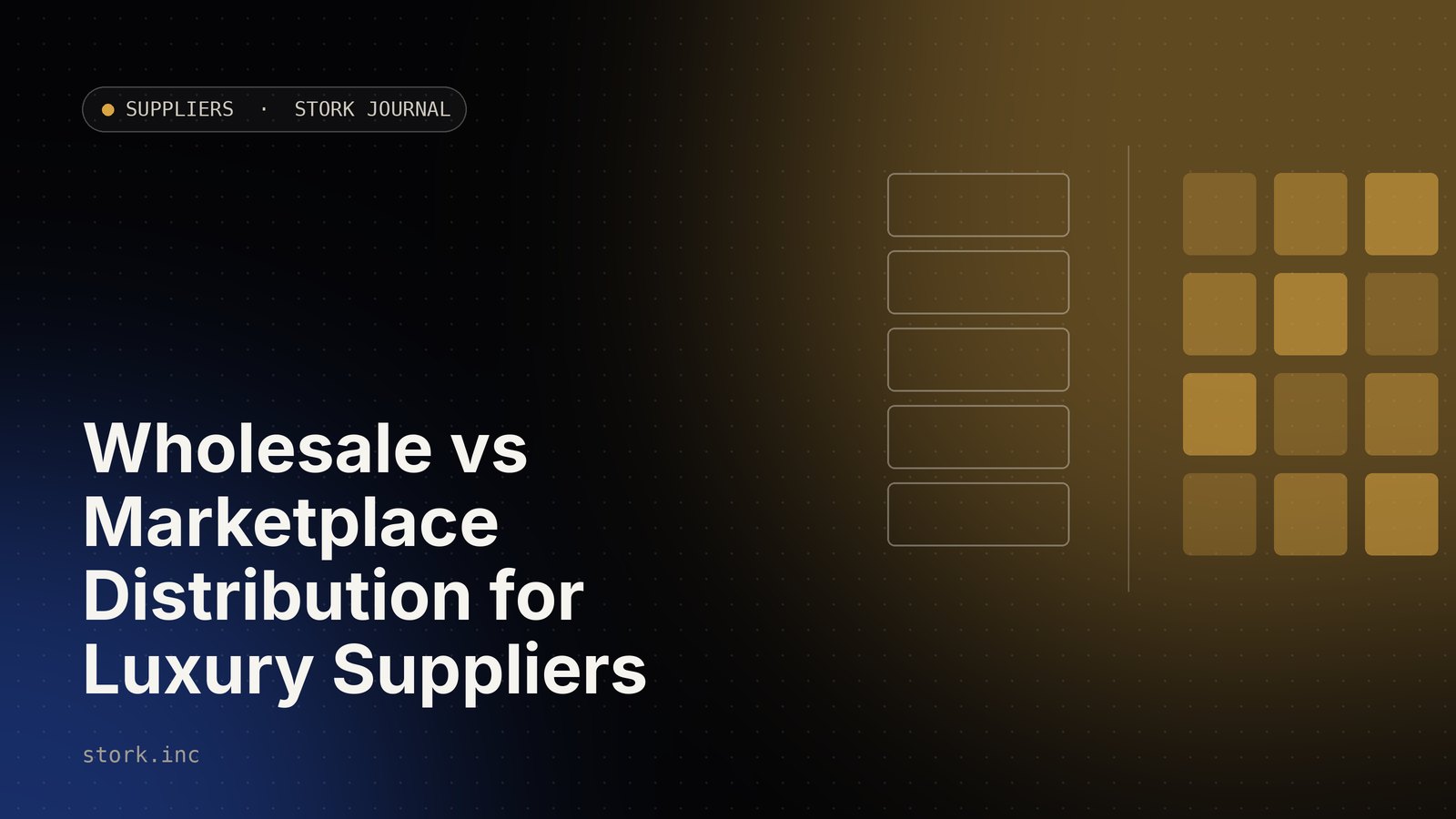
Side by side
- Reach: wholesale gives you a few accounts; dropship distribution gives you many retailers in many markets.
- Price realised: wholesale pays the wholesale rate; dropship pays your net price per unit.
- Inventory risk: wholesale moves stock to the retailer and it often comes back; dropship keeps stock with you and nothing ships in.
- Speed to a new market: months with wholesale, days with dropship distribution.
How smart suppliers combine them
Use wholesale for core, predictable lines. Use dropship distribution for long-tail sizes, older seasons, new markets and anything sitting in the warehouse longer than you would like. The second channel absorbs what the first one leaves behind.
With Stork, one integration lists your catalog across approved online retailers in 10+ markets. Stork handles payment, tax and duties as Merchant of Record and pays you on net terms.
FAQ
Does dropship distribution compete with my wholesale accounts?
It should not if channel rules are respected. Stork only lists your products where you and the brand allow it.
Is the margin lower than wholesale?
You set your own net price. Because units sell individually through demand-matched channels, many suppliers realise more per unit than in bulk sales.
Apply as a supplier to compare both channels on your own catalog.