Luxury distribution has run on relationships, spreadsheets and seasonal buying for a long time. In 2026, AI is changing how authentic stock finds its buyers, without replacing the relationships that make the industry work.
1. From seasonal buys to live demand matching
Instead of guessing what will sell six months ahead, AI reads live demand signals across retailers and markets and routes each SKU to where it is most likely to sell now. Stock moves faster, at better prices.
2. Brand rules become machine rules
Approved retailers, regions, price floors and presentation used to live in contracts and emails. Now they can be written once and enforced automatically on every listing and every order. That is the difference between a policy and control.
3. Catalog data cleans itself
AI maps, enriches and normalises product data from any source, from Shopify to a spreadsheet, into the format each retailer needs. Weeks of manual catalog work become days.
4. Pricing that protects value
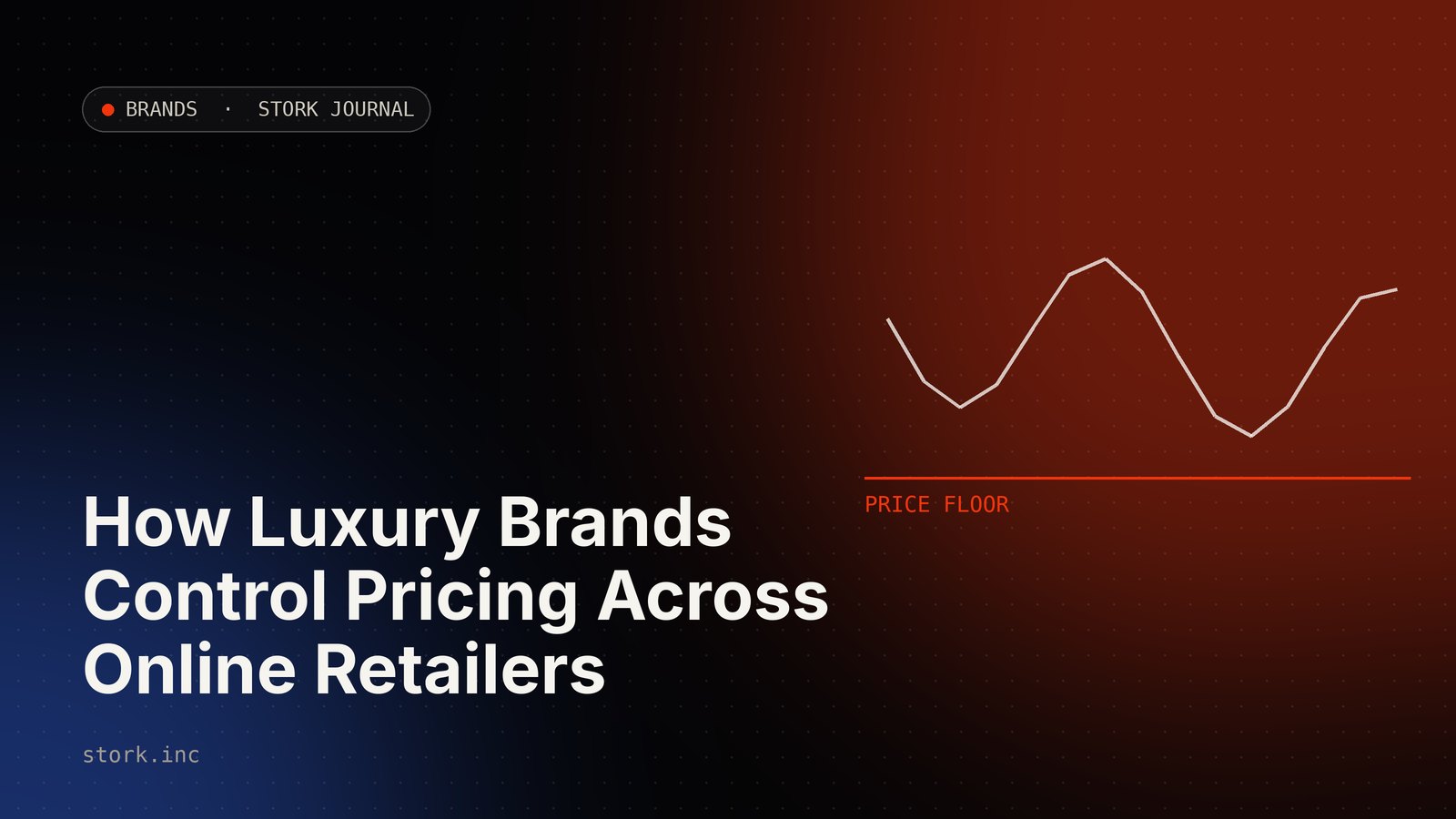
AI can find the best achievable price inside a brand's floor and MSRP for each market, instead of racing to the bottom.
5. Data flows back to every side
Sell-through, price realised and demand signals return to brands, suppliers and retailers, so next season's decisions are based on what actually sold.
What does not change
Authenticity, trust and partnerships still decide who wins in luxury. AI makes them scale.
Where Stork fits
Stork is the AI commerce infrastructure built for this shift. Brands set the rules, suppliers connect authentic inventory, and online retailers list it with zero stock, across 10+ markets.
FAQ
Will AI replace buyers and account managers?
No. It removes manual matching and data work so teams can focus on partners and strategy.
Is AI pricing safe for luxury brands?
When it operates inside brand-set floors and approved channels, yes.
Apply to Stork to see AI distribution on your own catalog.